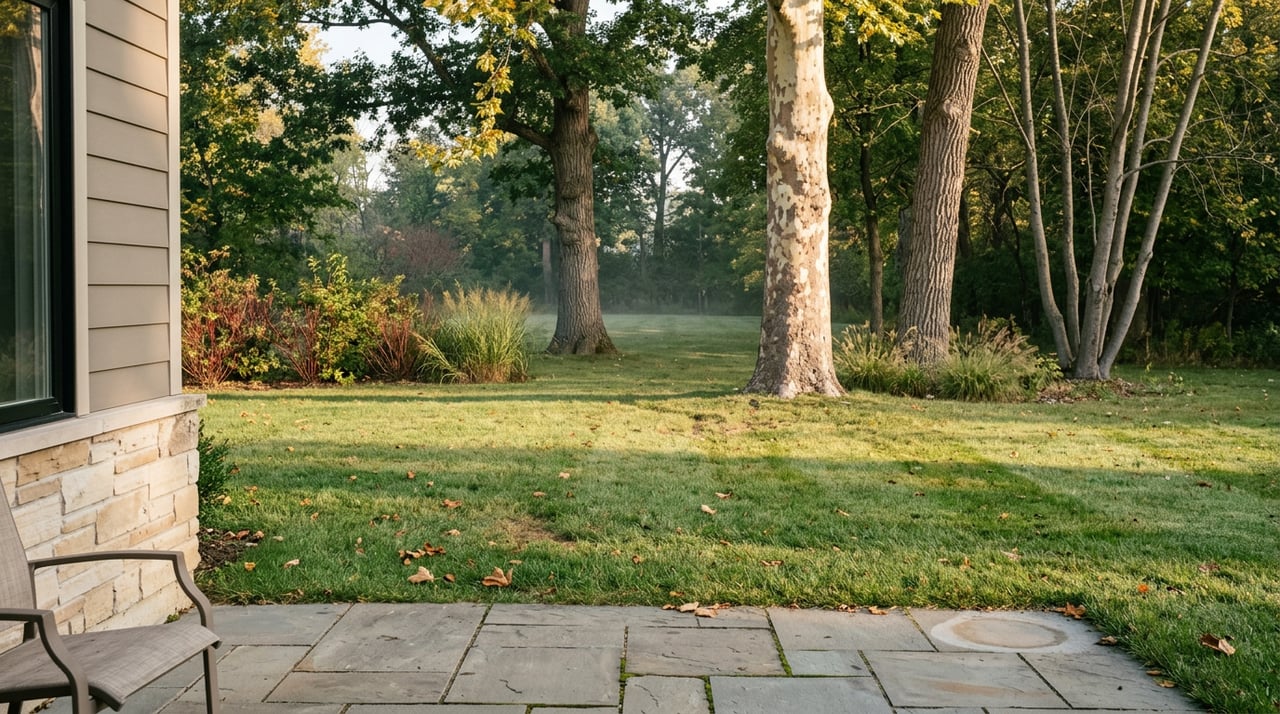
Walk the mowed loop at Riverfront Park on any weekday evening and you'll eventually reach the same spot: a treeline on the park's west end where the trail simply stops. For as long as most Bourbonnais residents can remember, that treeline marked the edge of the park and the start of someone else's land. As of this spring, it doesn't anymore.
In April, Bourbonnais trustees voted to annex just under 6.6 acres onto the west end of Riverfront Park, land the Kenneth and Marlou Johnston family donated to the village in early 2025. The vote pushed the park's footprint from 10.7 acres to roughly 12, according to reporting from the Daily Journal. That sounds like a modest bump on paper. On the ground, it's the first real change to this park in twenty years, and it lands at a moment when the village still hasn't shown residents what it plans to do with the space.
Two Decades of the Same Park
Ask a longtime resident what they associate with Riverfront Park and the answer probably hasn't shifted in a while. Village materials describe the park as largely untouched for the past two decades, and the amenity list backs that up. What's there today:
- Benches, biking and walking trails, and fitness equipment along the loop
- Fishing access and a frisbee golf course
- A historic pavilion, a seasonal restroom, and a Little Free Library
That's the park at 1200 Canterbury Lane, sitting along the north bank of the Kankakee River on the village's southwest side. It's one of only two Bourbonnais parks that actually touch the river, which is part of why the village has spent more than two years figuring out what to do with it rather than just mowing it and moving on.
What the Johnston Gift Actually Added
The number attached to the donation depends on which document you read. Some village press releases cite 6.5 acres. Others say 6.6. The Daily Journal's reporting on the underlying ordinance puts the three donated parcels at 6.63 acres combined, including 600 feet of new Kankakee River shoreline layered onto the 1,120 feet the park already had. That's a jump of roughly 54 percent in river frontage from a single gift.
Here's how the numbers stack up before and after the April vote:
| Metric | Before the donation | After annexation (April 2026) |
|---|---|---|
| Park acreage | 10.7 acres | approximately 12 acres |
| Kankakee River shoreline | 1,120 feet | approximately 1,720 feet |
Village officials have said the new acreage will stay wooded, with the exception of a public natural trail cut through it. Beyond that, the specifics are still open.
A Grant Bigger Than the Design Contract
Here's the detail that got buried in the acreage headlines: the state grant to clean up the donated woodland cost more than three times what the village is paying to design the future of the entire original park. State Sen. Patrick Joyce secured a $110,000 grant for remediation of the Johnston property. Kimley-Horn and Associates, the firm running the whole master planning process for the 10.7-acre park, is being paid $34,400.
That gap tells you something the press releases don't say outright. The donated woods weren't just a scenic bonus. They needed real environmental work before the village could safely open a trail through them, and that work is part of why the project paused for about a year and a half while the land moved through legal transfer and cleanup. A generous gift still came with homework attached.
Three Rounds of Public Input, Then Silence
The master planning process has been unusually thorough for a project this size. It started in January 2024 with a public workshop that drew about 50 residents and an online survey. Then came the Johnston donation, which put everything on hold. Planning resumed in October 2025 with a second open house where Kimley-Horn presented survey results, and it wrapped up on February 19, 2026, with a third and final workshop where the firm presented two competing design concepts for residents to react to.
Mayor Jeff Keast has been vocal about how much he likes what this park could become, ranking it just behind The Grove on his personal list of village parks.
"My favorite park by far is The Grove. My second favorite park is Riverfront Park."
He's said he makes a point of visiting each fall to watch the color change along the river, which is as close as an elected official gets to describing a park like a regular.
Trustee Angie Serafini, after the October workshop, put the moment plainly:
"We had a great turnout tonight and thank everybody from the community for participating."
What hasn't happened yet, as of this writing, is a public unveiling of which of the two design concepts the village actually chose, or a construction timeline. The land is legally bigger. The plan for it is still one of two options sitting in a consultant's file.
The Kayak Launch That Might Not Happen
One idea floated during the October 2025 workshop deserves attention precisely because it isn't confirmed. Village officials discussed adding a kayak access point on the new shoreline, doubling as a launch spot for rescue crews responding to river incidents. It's a genuinely useful idea for a park that just gained more river frontage than most Bourbonnais residents will ever personally own.
But it's still a proposal inside a concept, not a line item in an approved budget. The same goes for the natural trail through the wooded donation. Both ideas surfaced in public meetings. Neither has been announced as final. If you're picturing a finished kayak dock next summer, you're picturing further ahead than the village has actually committed to going.
What This Means If You Already Walk Here
Nothing changes at Riverfront Park this week. The mowed loop, the fishing access, the frisbee golf course, all of it works exactly as it did last month. The treeline that used to mark private land is now technically inside the park boundary, but there's no new trail cut through it yet, and there won't be until the village picks a direction and funds the work.
If you want to know what happens next, the three official rounds of public input have already closed. Future decisions will run through open Village Board meetings at the Municipal Center on Main Street, the same building where the February workshop was held. That's a different kind of engagement than a survey link, but it's still public, and it's still the place where the choice between those two design concepts will eventually get made.
For now, the honest version of this story isn't "Bourbonnais just built something new." It's that the boundary moved before the plan did, and the next time you walk that loop and hit the old treeline, you're standing at the edge of a decision that hasn't been finished yet. Keast said he goes out there in the fall for the leaves. This fall might be a good one to see what's changed, and what's still just waiting on a drawing board in a consultant's office downtown.
Leanne Provost has spent nearly two decades paying attention to what happens in Bourbonnais beyond the for-sale signs, from park master plans to the small votes that quietly reshape a town. If you're curious what a changing corner of the village might mean for your own property or your next move here, schedule a free consultation to talk it through.